Portfolio
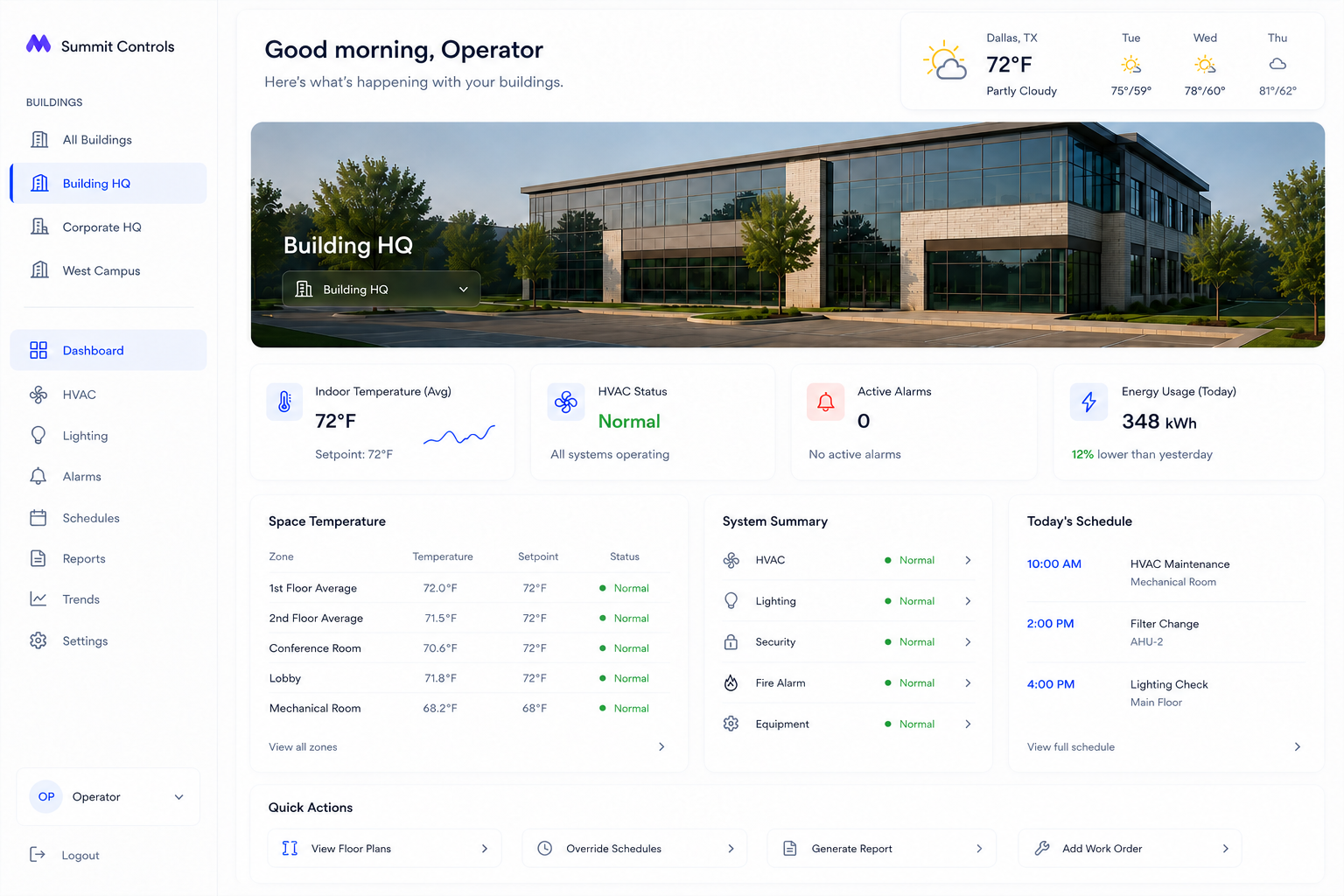
Instant snapshot across buildings: alarms, comfort, status, weather, and AI insights in one view.
01 · BRIEF
Traditional BMS interfaces are built around point trees and engineering workflows, not answering “what needs attention?” across a portfolio.
Thousands of HVAC points, alarms, setpoints, and schedules. Access isn’t the hard part. Clarity is. Atlas puts a modern intelligence layer on top of existing automation infrastructure.
02 · NAVIGATION MODEL
Progressive disclosure. Executives stay high. Technicians drill deep.
Instant snapshot across buildings: alarms, comfort, status, weather, and AI insights in one view.
Dedicated operational views with floors, systems, and equipment organized the way operators think.
Focused AHU, VAV, and device views with temperatures, setpoints, commands, and alarms that matter.
AI reads relationships between values so technicians know where to investigate first.
03 · VISION
“What needs my attention?”
Answer that first.
Not another point browser. A modern layer between Niagara infrastructure and the people running buildings every day.
04 · PRODUCT SURFACES
Alarms, comfort, temperatures, equipment needing attention, weather, anomalies, and AI insights across the portfolio.
Floors, systems, and equipment in a visual hierarchy. Context raw telemetry alone can’t provide.
AHUs, VAVs, sensors, controllers. Only the points, setpoints, commands, and alarms that matter.
Overview → Buildings → Systems → Equipment → Details. Everyday tasks without engineering-level navigation.
05 · AI LAYER
Zone at 76.8°F, cooling setpoint 72°F, damper at 100%. Atlas can explain that the zone is above setpoint while already fully open, pointing investigation upstream.
Context fed to the model
06 · OT ↔ CLOUD
Custom Java modules form a controlled bridge, translating equipment, points, alarms, and schedules into a format the cloud platform understands without exposing controllers to the public internet.
Building Automation → Niagara → Java Modules → Cloud → Atlas
07 · SYSTEM
Web UI
Responsive operator app across desktop, tablet, and mobile, with a shared design language for dashboards, alarms, and equipment.
Data model
Organizations, buildings, systems, equipment, devices, users, and operational metadata in a relational hierarchy.
OT integration
Custom Niagara 4 modules expose building data while keeping the operational network separated from the cloud.
Cloud infra
Centralized building intelligence with secure remote access. No direct public exposure of BMS interfaces.
LLM context
Summaries, anomaly surfacing, and troubleshooting assistance grounded in real equipment relationships.
OT mindset
Controlled integration edge between building systems and cloud services. Remote intelligence, isolated control.
08 · ENGINEERING
Translate points, devices, schedules, and alarms into structures a SaaS app can consume, without fighting how Niagara actually works.
Organizations → buildings → systems → equipment → thousands of points. Hierarchical, queryable, navigable.
An LLM isn’t useful on isolated sensor values. Context like relationships, setpoints, alarms, and schedules is the real product.
Traditional BMS exposes everything. Atlas prioritizes operational importance and reveals depth only when needed.
09 · INTERFACE
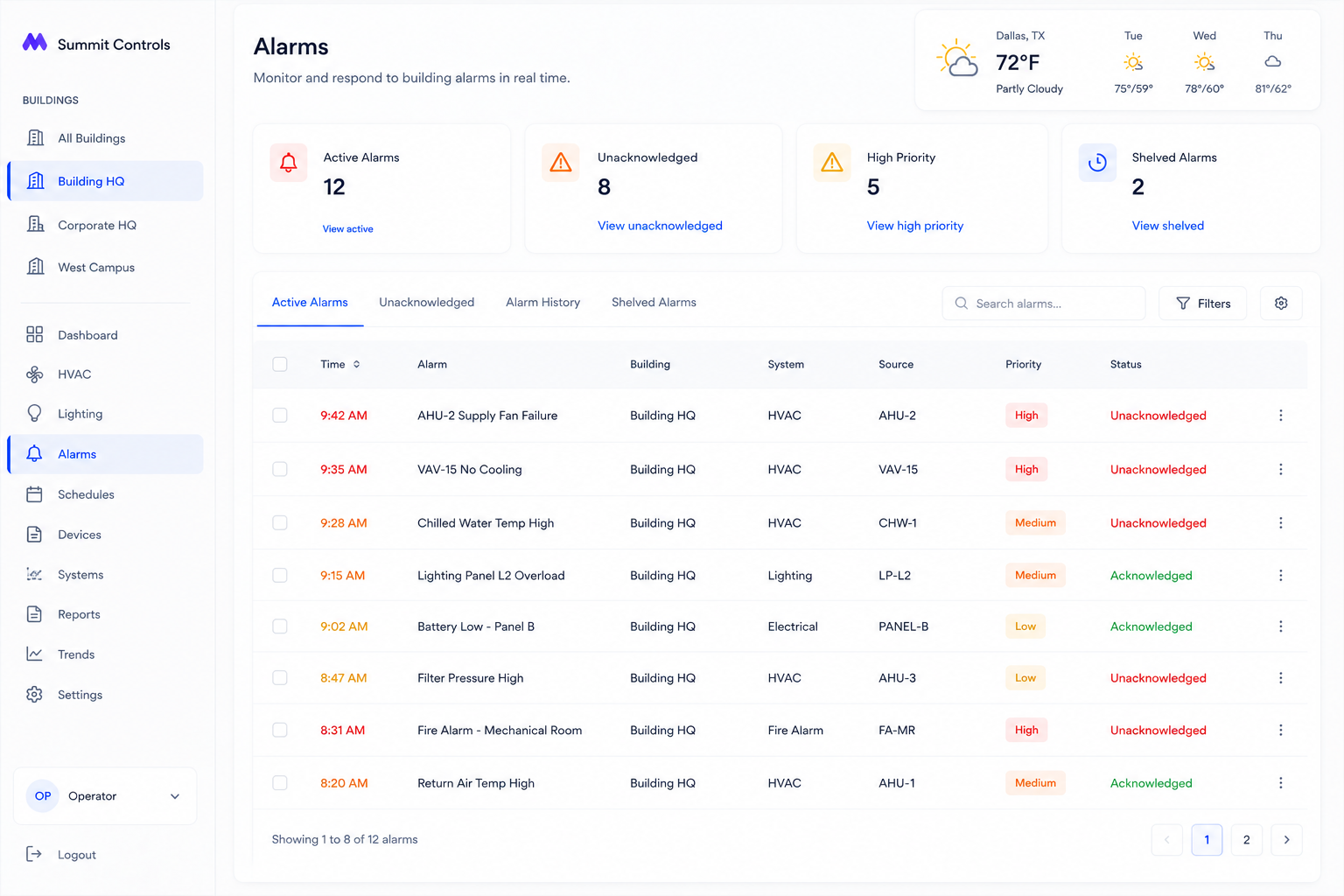
Dashboard · Alarms · HVAC · Schedules · Devices. Status loud. Noise quiet.
10 · ROLE & OUTCOME
Designed and engineered end-to-end, from Niagara modules and AWS to operator UX and AI context. A bridge between decades of building automation and modern cloud software.
Niagara keeps reliable control. Atlas adds cloud connectivity, clearer visualization, simpler navigation, and AI-powered intelligence.
Data → Insight
LET'S WORK TOGETHER
I'm always open to discussing new ideas, challenging problems, and impactful projects. Let's create something exceptional.